


Going Out to Dinner with Kids While on a Sleep Schedule
4 Month Old Sleep: Your Top Questions Answered
As your little one transitions from a sleepy little newborn, to a more alert infant, you might be wondering about wake windows, schedules, and the 4-month regression. We’ve got you covered!
Between 16 and 20 weeks, your baby will go through a true sleep regression as their brain transforms. This is such a big topic we have a blog dedicated to it! During this shift, you might notice more night wakings and shorter naps. Your baby’s sleep might be disrupted during this change, but fear not, we have some tips to help get them back on track.
Plus, the good news for independent sleepers is that 4 months is generally uneventful in terms of sleep regressions of disruptions!
Eat, Play, Sleep. On Repeat.
Now that your baby is older, it’s important to separate their feeds and sleep. Start their wake window with a feed first, and make sure they are wide awake. Removing drowsiness is essential after the 4-month regression as it is often the culprit for shorter naps and more frequent wakings. The reason for this is that drowsiness disrupts their sleep pressure so they aren’t as tired, causing some unusual wakings, OR drowsiness falsely restores them making it harder to fall asleep. In other words, it’s just not great for their sleep now that they are older.
What is an ideal sleep schedule for a 4 month old?
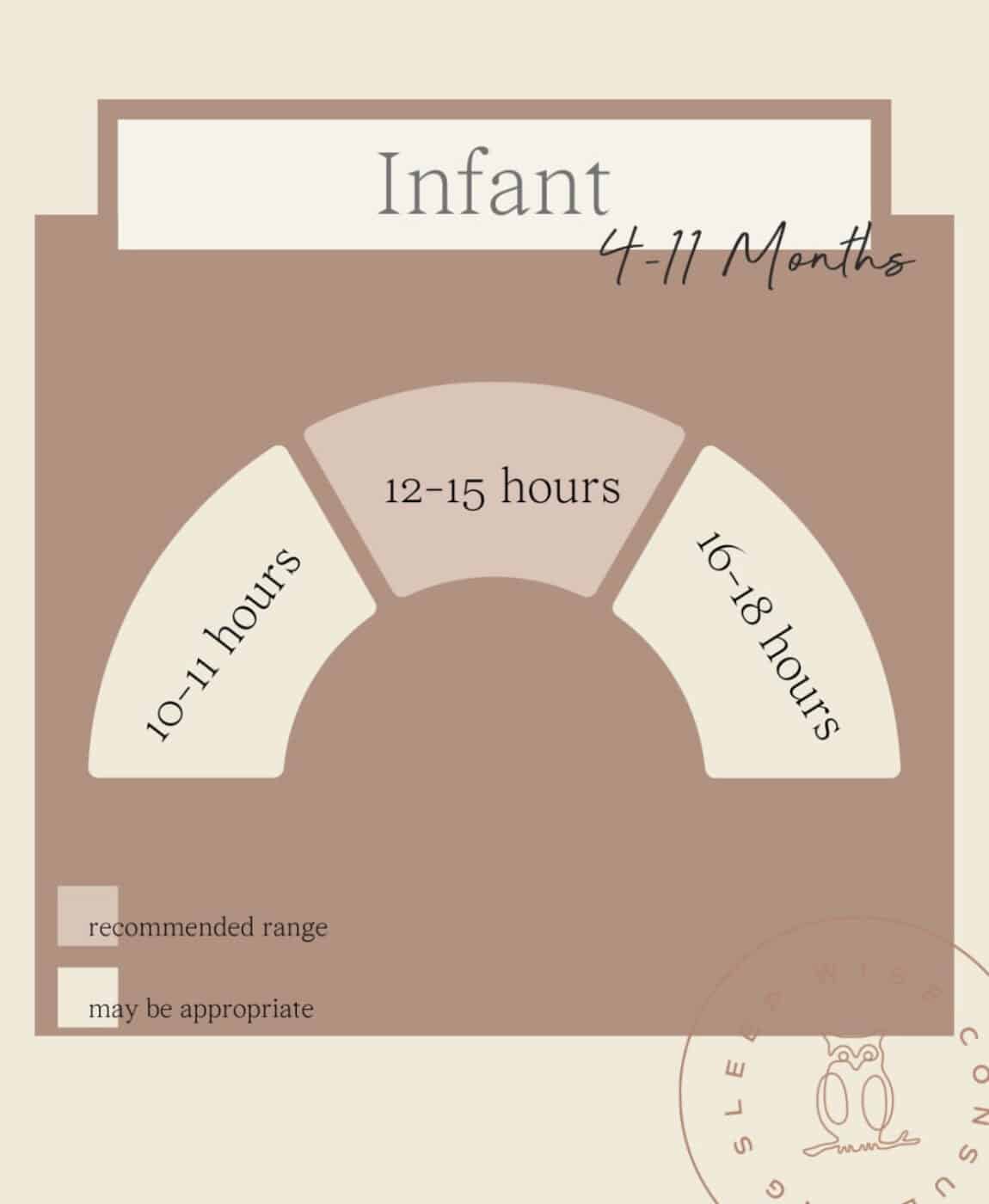
In our experience, at 4 months, most babies need between 1 hours & 45 minutes and 2 hours of awake time. As they day progresses, they typically need bigger wake windows to help them sleep better, especially for their overnight sleep.
7:00 AM – wake up & feed #1
8:45 AM – nap 1 (1.5 – 2 hours)
10:45 AM – wake up & feed #2
12:45 PM – nap 2 (1.5 – 2 hours)
2:15 PM – wake up & feed #3
4:15 PM – nap 3 (about 45 minutes to 1.5 hours)
5:00 PM – wake up and a small feed #4
6:15 PM – start the bedtime routine with feed #5 first, fully awake
7:00 PM – bedtime

With this sample schedule there are a couple points I like for parents to remember. If your baby sleeps under an hour, give them a chance to fall back to sleep for their next sleep cycle. Wait about 10 minutes and see if they can fall back asleep, and if not, go ahead and call the nap. You’ll still follow a full wake window before their next sleep to ensure they are tired enough to sleep longer. It’s ok if you need to include a 4th nap as they work on sleeping longer. This is 100% normal at 4 months, so don’t get discouraged. Stick with your routine, work on removing drowsiness, and having them fall asleep on their own. Your consistency is key to helping them figure this out.
Bedtime Routines at 4 Months
If you haven’t introduced a bedtime routine for your little one, now is a great time to start. It can be super simple! An example of a bedtime routine would be: Start with your feed first. Somewhere with a lot of light and sounds to keep them awake and alert. After this, you can do a bath or wipe down before getting them in their pajamas. Once dressed for bed, you can read 1-2 stories together. They’re small, so it’s ok if they aren’t interested in the story. The idea is to create a routine that’s familiar so they begin to associate this with sleep. After books, you can say good night to their room, turn the sound machine on, and then place your baby wide awake in their crib. Don’t forget all the kisses and snuggles before tucking them in.
Nighttime Wake-Ups
It’s normal for us to see 4 month old babies sleep 10-12 hours without an overnight feed, and it’s also common for other babies to eat once at night. The best way to consolidate their overnight sleep is ensuring they are falling asleep without any props or drowsiness at the start of their nighttime sleep. Once asleep, remember babies are loud and active in their sleep.
It’s also normal for them to wake up and connect back to sleep on their own. If your little one wakes up after falling asleep, before going in, give them time to fall back to sleep, or make sure they are truly awake. After waiting and your little one is still awake, when you go in, turn on a light first. This will help ensure they don’t get drowsy during their feed. Change their diaper next to break any wake to feed associations. Next feed them and keep them alert and awake. After the feed is finished, burp your baby, get them back in their sleep sack, and place them in their crib awake. You can offer comfort as needed as they work to put themselves to sleep. When you intentionally wait to go in you are actually giving your baby a chance to practice self-soothing. It’s incredibly productive and helps their overall sleep so much. And ensuring they aren’t drowsy during this feed allows them to fall asleep faster and sleep longer. It’s the best way to consolidate night wakings.
Ideal Sleep Environment
Similar to adults, babies sleep better in a room that is dark and cool. The darker the better! And using a sound machine is also helpful as it can block outside noises from waking your baby.
So many parents fear this 4 month regression, and that’s ok. Following these tips will help you feel confident during this transformation. And it’s ok if your little one has a harder time adjusting. Your consistency and your commitment to a routine will help them get right back on track.